Code review is broken
Code changes get approved without being read. AI writes more code than anyone can check. A typo fix gets the same attention as a payments refactor. And often only one person knows how things work. Reviewsaur fixes all of it.
Reviews have turned into a formality. Someone opens the pull request, scrolls, clicks Approve. Nobody really checked the change, but it's merged anyway.
When AI writes the code and nobody reads it closely, the team loses track of how their own system works. Fewer people understand it, and fewer people grow.
A typo fix and a big refactor go through the same review. Reviewers waste time on trivial changes, and the important ones get the same quick glance.
Reviewsaur decides when a review is necessary
Every pull request is read and rated before anyone is asked to do anything. The verdict and the reason are posted on the pull request, so nothing is hidden.
A typo, a comment, docs, a version bump, a config value. Nothing changes at runtime. The check goes green with no quiz, and a comment says why.
A real change. Reviewsaur explains it in plain words and asks whoever signs off a few questions before the check turns green.
Touches several parts of the code, the data model, auth, billing or error handling. Same explanation and quiz, and the verdict tells the reviewer to take their time.
You set the rules. Changes over 100 lines are never trivial. You list the paths that always need a review, like billing, auth or migrations. Reviewsaur judges the diff only and ignores a title that says “trivial fix”. If it can't decide, the change gets a full review, and a failed review is never turned green afterwards.
How the decision is madeWhat happens when a change needs a review
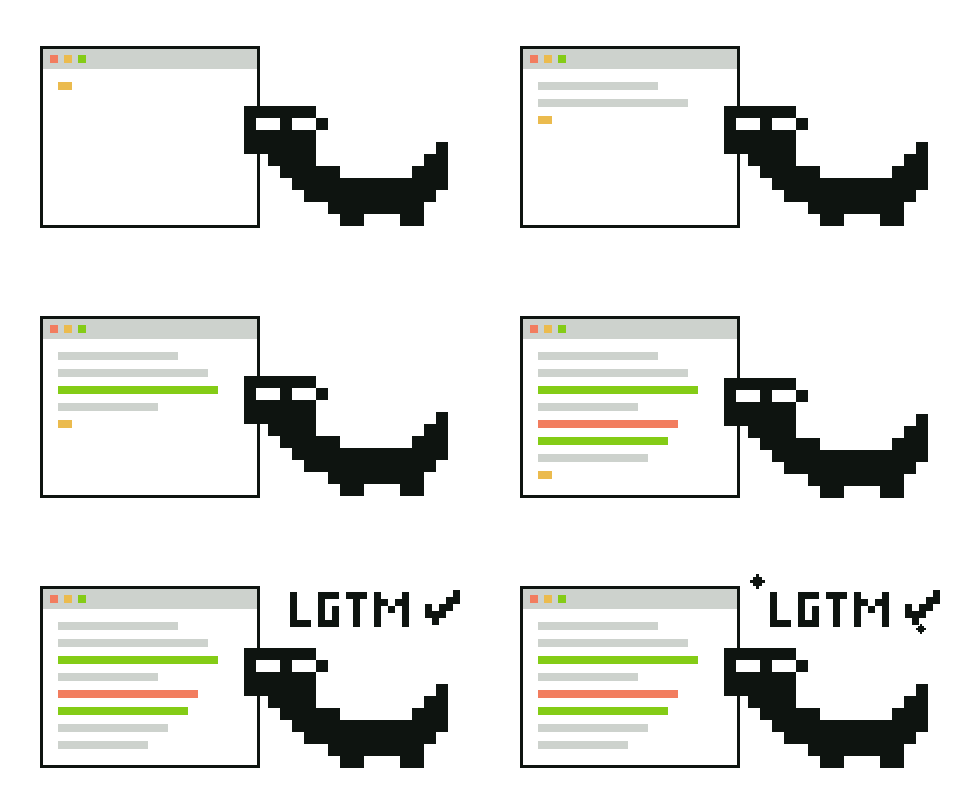
Reviewsaur connects to GitHub. Every time someone opens a pull request it decides whether the change needs a review. When it does, three things happen.
Before you review, Reviewsaur explains what the change does, how it works, and which other parts of the code it touches — file by file. Just the facts, no opinions.
You decide who has to prove they understand the change. Most teams start with the author, so the person shipping AI-written code can explain it. Some also require the reviewers who approve. An admin sets the rules in settings.
Every quiz shows you what you missed and explains the right answer — and if you are stuck, “I don’t know” reveals the explanation on the spot. Users tell us it’s one of the fastest ways to learn a codebase — and to become a better developer. Great for new team members.
Up and running in three steps
Install
Connect your GitHub in one click.
Decide
Reviewsaur reads each pull request and decides if it needs a review. If it does, it explains the change in plain words and writes a short quiz.
Approve
Reviewer or author passes the quiz and the check turns green. You set how many passes a change needs. Trivial changes turn green on their own.
We read the change, not your whole codebase
We only see the change
We read the code change and its title — never a full copy of your codebase.
Never used for training
Your code is never used to train AI models. We delete the change as soon as the quiz is made.
Delete anytime
Remove a repo and its quiz data goes with it. DPA available on request.
The review tool developers actually thank you for.
Ship AI code safely. Review what matters, and grow a team that understands it.
Get started — free