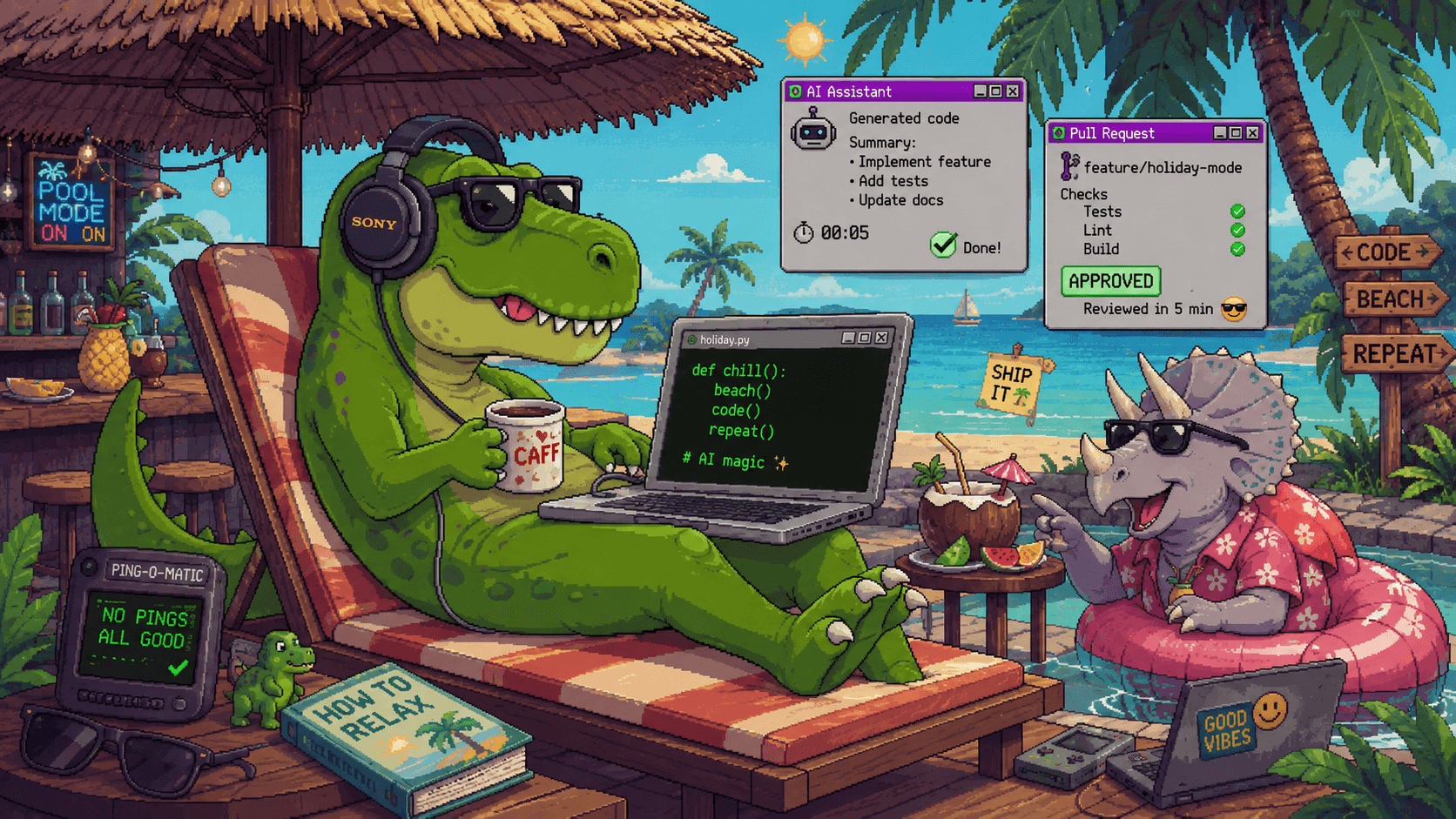
AI Coding Has Created a New Risk for Leaders: Paying for Work They Can’t Verify
AI is making engineering teams faster.
But for managers, that speed comes with a new and uncomfortable question:
Are we paying for real engineering work, or just for a five-minute prompt that looks like a day’s output?
That is the new leadership risk.
Developers can now generate code in minutes. Reviewers can approve it quickly. Tickets can move to done faster than ever.
But none of that tells you whether the work was actually understood, reasoned through, or genuinely valuable.
And that matters, because leaders are still paying the same salary, carrying the same responsibility, and owning the same production risk.
The Management Problem Nobody Wanted
Engineering managers and CTOs are under pressure to adopt AI.
Developers want tools that help them move faster. Executives want productivity gains. Competitors are already using AI-assisted workflows, so doing nothing is not realistic.
But the result is a new kind of blind spot.
A developer can spend five minutes prompting AI, then spend another few minutes tidying up the output. The PR gets merged. The task closes. On paper, it can look like a full day of work.
But was it really?
Did the developer actually understand the code?
Did the reviewer understand it?
Did the team gain knowledge, or just move text around faster?
That is the question leaders are now forced to ask.
Why This Becomes a Cost Problem
When teams adopt AI without a way to measure understanding, managers can lose visibility into what they are actually getting for their budget.
That creates a few risks:
- work looks productive, but little real understanding is built,
- prompts are passed off as engineering effort,
- code gets merged without deep ownership,
- and the company pays for output that may be cheap to generate but expensive to maintain later.
In other words, AI can make engineering look more efficient while quietly making it harder to know whether you are getting real value.
The Hidden Consequence
The biggest problem is not just wasted time.
It is mispriced work.
If a five-minute AI prompt creates the appearance of a full day of engineering, managers can no longer reliably tell:
- what was actually produced by the engineer,
- what came from the model,
- what was understood,
- and what is likely to cause rework later.
That is how AI turns into a leadership accounting problem, not just a technical one.
Why Standard Metrics Don’t Solve It
Velocity, ticket counts, and PR volume can all go up.
But those metrics do not tell you whether the team is producing meaningful engineering work or just producing more surface area.
A manager can look at the dashboard and think productivity is improving, while the real question remains unanswered:
Did we just buy speed, or did we buy understanding?
Why Reviewsaur Exists
Reviewsaur helps teams measure understanding before merge.
It generates a short quiz from the actual pull request so leaders can see whether the author or reviewer really understands the change.
That means you are no longer relying on trust alone to know whether the work is real.
You can check comprehension before merge, reduce blind approvals, and make sure AI is helping teams deliver actual engineering value rather than just faster-looking output.
The Real Question for Leaders
If a five-minute prompt can look like a full day of work, then the real challenge is no longer productivity.
It is visibility.
And if you cannot verify that your team understands what they are shipping, you may be paying for speed that does not compound.
Try Reviewsaur free and give your team a way to prove understanding before merge.